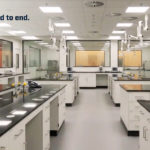
How Modern Laboratory Planning Improves Scientific Productivity
In modern research environments, productivity is no longer defined only by the skill of scientists or the sophistication of instruments. It is increasingly shaped by how well a laboratory is designed, organized, and integrated as a complete ecosystem. Today, organizations are realizing that fragmented lab setups often lead to inefficiencies, safety risks, and slower innovation cycles.
This is where integrated lab planning becomes essential. By combining architecture, engineering, workflow design, and safety systems into a unified approach, integrated planning transforms a traditional workspace into a high-performance scientific environment. Companies like Kewaunee play a crucial role in delivering end-to-end laboratory solution frameworks that directly enhance scientific productivity.
Understanding Integrated Lab Planning
Integrated lab planning is a holistic approach to designing and building laboratories where every element—layout, furniture, utilities, safety systems, storage, and digital infrastructure—is planned in coordination rather than isolation.
In a traditional setup, labs are often built in phases without fully considering long-term workflow efficiency. Equipment is added later, utilities are modified on demand, and space utilization becomes reactive instead of strategic. This fragmented approach leads to:
- Poor space utilization
- Inefficient researcher movement
- Safety hazards due to cluttered layouts
- Increased operational downtime
- Difficulty in scaling research operations
Integrated lab planning eliminates these issues by ensuring that every component of the chemical laboratory is designed with purpose and future adaptability in mind.
Why Productivity Depends on Lab Design
Scientific productivity is directly linked to how easily researchers can perform tasks without unnecessary interruptions. A well-planned lab reduces wasted time, improves collaboration, and minimizes operational friction.
Key productivity barriers in poorly designed labs include:
- Long movement cycles between equipment
- Lack of ergonomic workstation design
- Inefficient storage systems
- Poor ventilation or utility placement
- Repeated setup changes for experiments
When these issues are addressed through integrated planning, scientists can focus more on experimentation and less on logistics.
A well-executed laboratory solution ensures that workflows are smooth, predictable, and optimized for research output.
Core Elements of Integrated Lab Planning
A successful integrated lab planning strategy combines multiple disciplines into a single cohesive system. The following components are essential:
1. Workflow-Centric Layout Design
The layout of a chemical laboratory should follow the natural flow of research activities—from sample preparation to analysis and storage. Integrated planning maps these workflows first, then designs physical spaces around them.
This reduces unnecessary movement and ensures that instruments and workstations are placed exactly where they are needed.
2. Flexible Infrastructure
Modern research needs evolve rapidly. A static lab design can quickly become obsolete. Integrated lab planning incorporates flexible systems such as modular benches, movable utilities, and reconfigurable workspaces.
This flexibility ensures that the laboratory solution remains relevant even as research requirements change.
3. Safety and Compliance Integration
Safety is not an add-on; it is embedded into the design. Proper ventilation, chemical storage systems, emergency exits, and hazard zoning are built into the lab blueprint from the beginning.
This reduces risk and ensures compliance with international safety standards in every chemical laboratory environment.
4. Utility Optimization
Gas lines, water supply, electrical systems, and data connectivity must be strategically positioned. Integrated planning ensures utilities are accessible, efficient, and scalable.
This minimizes downtime during maintenance or upgrades and improves overall lab efficiency.
5. Ergonomics and Human-Centered Design
Scientific productivity is also influenced by researcher comfort. Ergonomic seating, appropriate bench heights, proper lighting, and noise control contribute significantly to reducing fatigue and improving focus.
A well-designed laboratory solution considers the scientist as the central user of the space.
Role of Integrated Lab Planning in Scientific Productivity
Integrated lab planning directly enhances productivity in several measurable ways:
Faster Research Cycles
When workflows are optimized, experiments take less time to set up and execute. Scientists can complete more cycles in a shorter period.
Improved Collaboration
Well-planned labs encourage teamwork by creating shared zones, discussion areas, and collaborative workstations.
Reduced Operational Downtime
Efficient utility systems and modular design reduce interruptions during maintenance or upgrades.
Higher Data Accuracy
A stable and well-organized chemical laboratory minimizes contamination risks and procedural errors, improving the reliability of results.
Better Resource Utilization
Space, equipment, and consumables are used more efficiently, reducing operational costs.
How Kewaunee Delivers Integrated Laboratory Solutions
In the global laboratory infrastructure space, Kewaunee is recognized for its expertise in delivering advanced, customized laboratory solution systems that align with integrated planning principles.
Rather than treating lab components separately, Kewaunee focuses on delivering complete environments that include:
- Modular laboratory furniture systems
- Custom workflow-based lab layouts
- Integrated utility management systems
- Safety-focused storage and ventilation solutions
- Scalable designs for future expansion
This end-to-end approach ensures that each chemical laboratory is not just built, but engineered for long-term scientific efficiency.
By aligning design with scientific goals, Kewaunee helps institutions reduce inefficiencies and accelerate research outcomes.
Digital Transformation in Lab Planning
Modern integrated lab planning also incorporates digital tools such as Building Information Modeling (BIM), simulation software, and data-driven design analytics. These technologies allow planners to simulate workflows, test safety scenarios, and optimize layouts before construction begins.
A digitally planned laboratory solution ensures:
- Accurate space forecasting
- Reduced design errors
- Optimized utility routing
- Predictive maintenance planning
This digital-first approach significantly improves the precision and reliability of chemical laboratory design.
Sustainability and Future-Ready Laboratories
Sustainability has become a key priority in scientific infrastructure. Integrated lab planning supports eco-friendly design by optimizing energy use, reducing waste, and incorporating green building materials.
Sustainable practices include:
- Energy-efficient HVAC systems
- Water-saving laboratory fixtures
- Recyclable or low-impact materials
- Smart lighting and automation systems
A future-ready laboratory solution is not only efficient but also environmentally responsible.
Companies like Kewaunee integrate sustainability principles into their lab designs, ensuring long-term value for institutions while minimizing environmental impact.
Challenges Solved by Integrated Lab Planning
Integrated planning addresses several common challenges faced by research institutions:
Space Constraints
Efficient design maximizes usable space without overcrowding.
Budget Overruns
Early-stage planning reduces costly redesigns and modifications.
Equipment Compatibility Issues
Proper planning ensures all instruments fit into the workflow seamlessly.
Regulatory Compliance
Safety standards and regulations are built into the design from the start.
Scalability Issues
Labs can expand without major structural changes.
Each of these improvements contributes to a more efficient and productive chemical laboratory environment.
The Future of Laboratory Design
The future of lab environments lies in adaptability, intelligence, and integration. Emerging trends include AI-driven lab management systems, automated experiment workflows, and smart environmental controls.
Integrated lab planning will continue to evolve, becoming more data-driven and user-centric. The goal is not just to build labs but to create intelligent ecosystems that actively support scientific discovery.
A well-executed laboratory solution will increasingly function as a living system—adapting in real time to the needs of researchers.
Conclusion
Integrated lab planning is no longer a luxury; it is a necessity for modern research institutions aiming to improve productivity and innovation. By aligning design, workflow, safety, and technology, it creates a seamless environment where science can thrive.
A thoughtfully designed chemical laboratory eliminates inefficiencies and empowers researchers to focus entirely on discovery. Companies like Kewaunee play a vital role in delivering comprehensive laboratory solution systems that transform how laboratories operate.
As science continues to advance, integrated planning will remain at the heart of every high-performing lab—driving productivity, safety, and innovation for years to come.
Kewaunee International Group

Kewaunee, the global leader in total laboratory solutions, empowers organisations to achieve competitive advantage through safe, efficient, and contemporary laboratories. In existence since 1906, Kewaunee powers the laboratories for over 5,000 customers in more than 100 countries.









Comments are closed.