Designing an Efficient Lab Setup for Educational Institutions
Science becomes meaningful when students can see, question, test and discover. A good educational laboratory gives them that opportunity. It is not just a room for practical classes. It is a place where curiosity becomes action and learning feels real.
For schools, colleges and universities, laboratory planning needs special care. The space must support teaching, student safety, instructor supervision, storage, movement, demonstrations and future academic needs. A poorly planned room can slow down learning, create confusion and make daily use difficult.
At Kewaunee, educational laboratories are designed with a clear purpose. Science is seen as a vehicle to understand the world through research and learning. Kewaunee works with leading centres of learning where students can take part in discovery without fear around safety and quality. That belief should guide every decision in an educational lab setup.
Start with the Way Students Learn
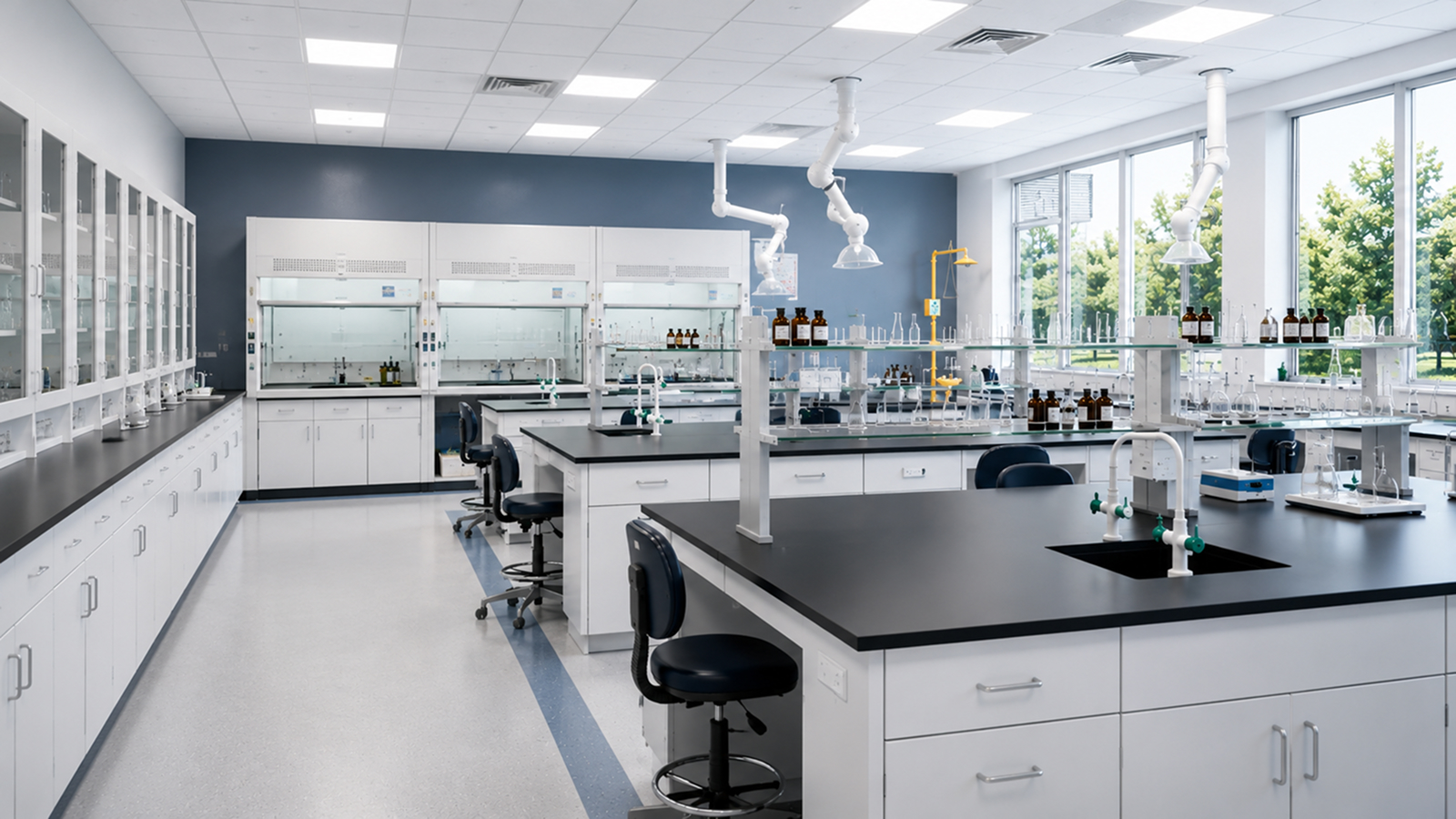
An educational laboratory is different from a research only space. It must support many users at the same time. Students may work in groups, observe demonstrations, handle materials, record findings and move between work areas. Teachers need clear sightlines, safe access and enough room to guide the class.
This means the design should begin with learning behaviour, not just room size. Before planning the layout, institutions should ask
- How many students will use the room at one time?
- Will the space support demonstrations, group activities or individual work?
- What safety systems are required for the subject being taught?
- How often will the space need to change for different sessions?
- What storage and work surface needs are expected?
- How easily can instructors supervise the full room?
When these questions are answered early, the laboratory becomes easier to use and safer for everyone.
What an Educational Laboratory Must Get Right
A successful educational lab setup balances safety, flexibility and ease of teaching. Students should be able to work confidently, while teachers should be able to manage the space without constant disruption.
The most important design priorities include
Clear movement paths
Students should be able to move without crowding. Open circulation also helps during demonstrations, cleaning and emergency response.
Safe work zones
Workstations, sinks, storage areas and safety systems should be placed where they support proper use and reduce unnecessary movement.
Strong and durable surfaces
Educational labs are used by many students over many years. Furniture and worktops must withstand regular wear, chemical exposure and heavy use.
Good visibility
Teachers should be able to see student activity clearly. This supports both learning and safety.
Future flexibility
Academic programs change. A lab designed today should still support new teaching methods and future learning needs.
Why Modular Furniture Works Well for Education
Educational laboratories need to serve different teaching styles. One class may need a demonstration focused layout. Another may need group based practical work. A senior research class may need more advanced workstations.
Kewaunee’s modular laboratory furniture supports this kind of change. The furniture is designed for flexibility and adjustability, which is essential for modern laboratories. Adaptable systems can be reconfigured, relocated or reused as needs change.
This is especially useful for educational institutions because science departments often serve multiple batches, courses and academic levels. A flexible room can support chemistry, biology, research learning or general science activities with better control over space.
Kewaunee’s adaptable furniture systems include options such as floor mounted systems, wall rail systems, self supporting frame systems, core based systems, panel based systems and table based formats. These choices help institutions plan rooms that match their teaching model instead of forcing one rigid layout.
Furniture That Can Handle Daily Student Use
In educational environments, laboratory furniture must be practical. It should be strong, easy to maintain and suited to repeated use. Students may be learning how to handle materials correctly, so the furniture must support safety and durability at the same time.
Kewaunee offers casework and furniture solutions in materials such as steel, wood, laminate, polypropylene, and stainless steel. These options allow institutions to choose the right material based on subject, usage level and maintenance needs.
For example, a school science lab may need easy to maintain surfaces and organized storage. A university research teaching lab may need stronger casework and specialized workstations. A biotechnology learning space may need flexible layouts that can change with academic projects.
Kewaunee’s caseworks are heavy duty, rugged and low maintenance. They are designed with materials suited to the work being performed and built to withstand demanding laboratory environments.
Planning for Safety Without Creating Fear
Students should feel confident in a laboratory. Safety should be built into the room so that learning can happen with clarity, not hesitation.
Kewaunee’s education focus is built around helping students take part in the discovery process without fear around safety and quality. This is an important idea. A safe lab does not make science feel restricted. It allows students to explore with the right guidance, layout and protection.
Safety planning may include
- Proper placement of workstations and storage
- Chemical resistant surfaces where needed
- Clear access to safety systems
- Good ventilation planning
- Defined zones for practical work
- Instructor friendly visibility
- Easy to clean furniture and surfaces
For advanced educational and research learning spaces, fume hoods, biosafety cabinets, laminar flow cabinets and safety cabinets may also become part of the larger plan. The right choice depends on the subjects taught and the level of laboratory use.
Making the Room Easier for Teachers
A laboratory should support teachers as much as students. If the layout is confusing, the teacher spends more time managing the room and less time teaching.
Good laboratory design helps teachers
- Guide students with better visibility
- Move between groups easily
- Demonstrate procedures clearly
- Maintain safe classroom discipline
- Organize materials before and after sessions
- Reduce time spent rearranging the room
In many institutions, one laboratory may serve several classes in a single day. A well planned room improves the rhythm of teaching. It helps the space reset faster and keeps practical sessions more organized.
This is where modular planning becomes valuable. When workstations, storage and service points are placed thoughtfully, the room feels easier to manage.
Designing for Growth in Academic Programs
Educational institutions grow. New courses are introduced. Student strength increases. Research expectations improve. A lab that once served basic practical work may later need to support advanced learning.
This is why flexibility should be included from the beginning. Kewaunee’s modular and adaptable systems help institutions avoid rigid layouts that become outdated quickly.
A future ready educational laboratory can support
- New teaching methods
- More collaborative learning
- Changes in student numbers
- New scientific processes
- Upgraded safety systems
- Improved workflow needs
The right lab setup should make science feel accessible today while staying ready for tomorrow’s academic goals.
Kewaunee’s Integrated Strength for Educational Labs
Kewaunee brings together laboratory furniture, advisory support, turnkey services, managed services and biosafety laboratory services. This helps educational institutions look at the lab as one complete environment rather than separate parts.
Through its lab room design approach, Kewaunee focuses on safety, efficiency, flexibility and longevity. Its turnkey services support the full journey from requirement analysis and space planning to engineering design, installation, testing, validation and handover.
For educational institutions, this integrated approach reduces planning gaps. It helps align learning needs with safety, quality and long term performance. A well planned lab setup can also make future upgrades easier because the space is built around both current academic use and long term institutional growth.
Conclusion
An educational laboratory should do more than support practical sessions. It should encourage discovery, protect students, help teachers and remain useful as academic needs change.
Kewaunee’s experience in laboratory infrastructure helps institutions create spaces where learning can happen safely and confidently. With modular furniture, durable casework, safety focused planning and end to end laboratory support, Kewaunee helps build academic laboratories that are practical, adaptable and ready for future learning.
A well designed lab can shape how students experience science. When the space is safe, flexible and easy to use, students can focus on asking better questions and understanding the world through research and learning. For any institution, a thoughtful lab setup becomes an investment in safer teaching, better discovery and stronger academic outcomes.
Create a safe, flexible and future ready learning space with Kewaunee.
Kewaunee International Group

Kewaunee, the global leader in total laboratory solutions, empowers organisations to achieve competitive advantage through safe, efficient, and contemporary laboratories. In existence since 1906, Kewaunee powers the laboratories for over 5,000 customers in more than 100 countries.









Comments are closed.