Sustainable Safety: How Global Labs Are Redefining Ventilation Standards for a Cleaner Future
The laboratories of the past have always been places with utmost precision and complete control, but in this age, they are also turning out to be the new icons of responsibility. Research facilities all over the world are expected to safeguard people’s health and the safety of their operations, and also the environment. This change has led to a silent yet significant revolution in the mindset of the laboratories regarding ventilation, airflow, and containment.
The systems originally conceived for maximum extraction alone are now being thought of as needing to be balanced. Safety, of course, is still a priority, but the topic of sustainability has, in a way, changed the very nature of the debate. The outcome is that a whole new breed of laboratories has come into existence that is, by design, safer, smarter, and cleaner.
Why Ventilation Is at the Center of Sustainability Conversations
One of the main reasons why laboratories are considered the most energy-consuming places in a building is due the continuous airflow, temperature control, and high air-change rates. All these factors require the mechanical systems to work very hard. For a long time, this was thought to be the price for safety.
However, nowadays, the assumption is being questioned by global labs. Thus, engineers and facility managers inquire whether there is a way to keep up the same level of protection while energy waste is minimized. The reply more and more often is yes.
Up-to-date ventilation techniques are based on efficiency not excess. The deeper understanding of airflow behavior allows laboratories to retain containment and at the same time decrease energy wastage. Hence, this approach leads to reduction of carbon footprints without any safety compromise.
Rethinking Containment for a Cleaner Future
Containment devices play a critical role in laboratory ventilation. They act as the front line between hazardous materials and the people who work with them every day. Historically, containment relied on constant high-volume air movement. While effective, it was not efficient.
Global laboratories are now adopting designs that prioritize containment performance over raw airflow. Precision-engineered systems maintain protection even at optimized air velocities. This evolution allows facilities to reduce energy use while preserving safety margins.
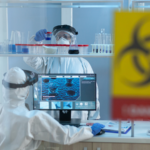
In this context, the bio safety cabinet has become a focal point of sustainable design discussions. No longer viewed as a standalone safety box, it is now treated as part of an integrated ventilation ecosystem.
The Role of Intelligent Design in Reducing Energy Load
The sustainable ventilation concept is not a single breakthrough but rather a series of design choices that work in concert. The latter include the creation of aerodynamic airflow paths, sealing to a greater extent, and controlling the movement of air based on actual usage patterns in a smart way.
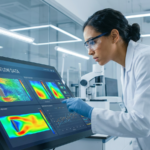
The use of sensors and monitoring systems provides laboratories with the information they need to ascertain the times when maximum airflow is required and when it is not needed. Moreover, adjustable systems take into account sash position, occupancy, and process requirements. Such a dynamic behavior is in stark contrast to the old model of constant maximum operation.
If applied uniformly, these enhancements can bring about a significant decrease in the overall energy consumption of laboratory ventilation systems.
Materials Matter More Than Ever
Sustainability is not only about airflow. Material selection plays a crucial role in long-term environmental impact. Durable, easy-to-clean surfaces reduce the need for frequent replacement. Corrosion-resistant materials extend service life and lower resource consumption over time.
In containment systems, smooth interiors and seamless construction simplify decontamination while supporting hygiene standards. These features reduce chemical usage during cleaning and minimize waste associated with maintenance.
A well-designed bio safety cabinet supports both safety and sustainability by performing reliably over decades rather than years.
Global Standards Driving Smarter Ventilation
In line with sustainability aspirations, international safety and performance standards have progressed. The present standards prioritize practical performance over the mere specifications of the theoretical ones. The systems have to prove their capability of containing the substances under actual operating conditions.
This transition pushes the producers and the testing facilities to direct their attention to quality engineering instead of extravagant designs. In situations where the performance is measured correctly, the excessive airflow is not needed any more.
The worldwide agreement on these standards has been a driving force for innovation and has made it possible to transfer best practices faster among various geographical areas and sectors.
Sustainability Without Compromising Safety
One of the biggest concerns around sustainable ventilation is the fear of reduced protection. In reality, sustainability-driven design often improves safety outcomes. Better airflow control reduces turbulence. Improved ergonomics encourage proper use. Enhanced monitoring detects issues earlier.
In many cases, laboratories find that safety improves as systems become more refined and responsive. A modern bio safety cabinet exemplifies this balance, offering robust containment while operating with greater efficiency and stability.
Sustainability, in this sense, becomes a path to stronger safety rather than a trade-off.
Experience Matters in Sustainable Transitions
Redefining ventilation standards requires experience. It demands an understanding of how laboratories function over time, across industries, and under varying regulatory conditions. Sustainable design is not achieved through theory alone. It is earned through decades of application and learning.
Kewaunee has been part of this evolution, supporting laboratories worldwide as they adapt to new expectations. By combining engineering expertise with real-world laboratory insight, the company helps facilities transition toward ventilation strategies that align safety, performance, and environmental responsibility.
This integrated perspective is essential for long-term success.
Building a Culture of Sustainable Safety
Technology alone cannot redefine ventilation standards. People play a critical role. Laboratories that succeed in sustainability efforts invest in training, awareness, and shared responsibility. Scientists and technicians are encouraged to understand how their actions influence airflow and energy use.
When users operate systems as intended and report early signs of change, facilities gain valuable insight. Sustainable safety becomes a collective effort rather than a top-down mandate.
This cultural shift ensures that investments in efficient systems deliver their full value.
What the Future Holds for Laboratory Ventilation
As research continues to grow more complex, laboratories will demand even greater flexibility from their infrastructure. Ventilation systems will become more connected, more adaptive, and more transparent. Data-driven insights will guide maintenance and optimization.
At the same time, sustainability goals will grow stricter. Laboratories that plan ahead today will be better positioned to meet future regulations and expectations.
The evolution of the bio safety cabinet reflects this future, where safety systems are intelligent, efficient, and aligned with global responsibility.
Conclusion
Sustainable safety is no longer an abstract idea. It is shaping how laboratories are designed, built, and operated around the world. By rethinking ventilation standards, global labs are proving that environmental responsibility and human protection can advance together. Through smarter airflow, durable materials, and performance-driven design, laboratories are creating cleaner, safer futures without compromise.
Speak with our experts to learn how modern containment and ventilation strategies can support a cleaner, more sustainable laboratory environment.
Kewaunee International Group

Kewaunee, the global leader in total laboratory solutions, empowers organisations to achieve competitive advantage through safe, efficient, and contemporary laboratories. In existence since 1906, Kewaunee powers the laboratories for over 5,000 customers in more than 100 countries.









Comments are closed.