What Is Meant by an IoT System? Full Guide by Kewaunee
Over the past ten years, the term Internet of Things (IoT) has been widely used in technology-related conferences and has recently been a center of discussion in day-to-day conversations. In a way or another, IoT is involved in the operation of the world; the concept has penetrated in numerous areas such as smart building lighting, automated laboratory equipment, and even industrial sensors on the floors of factories. Despite this, many people still ask themselves upon hearing the term: What constitutes an IoT system? How does it function? And why is it becoming more and more important to healthcare industries, research labs, pharmaceuticals, and manufacturing?
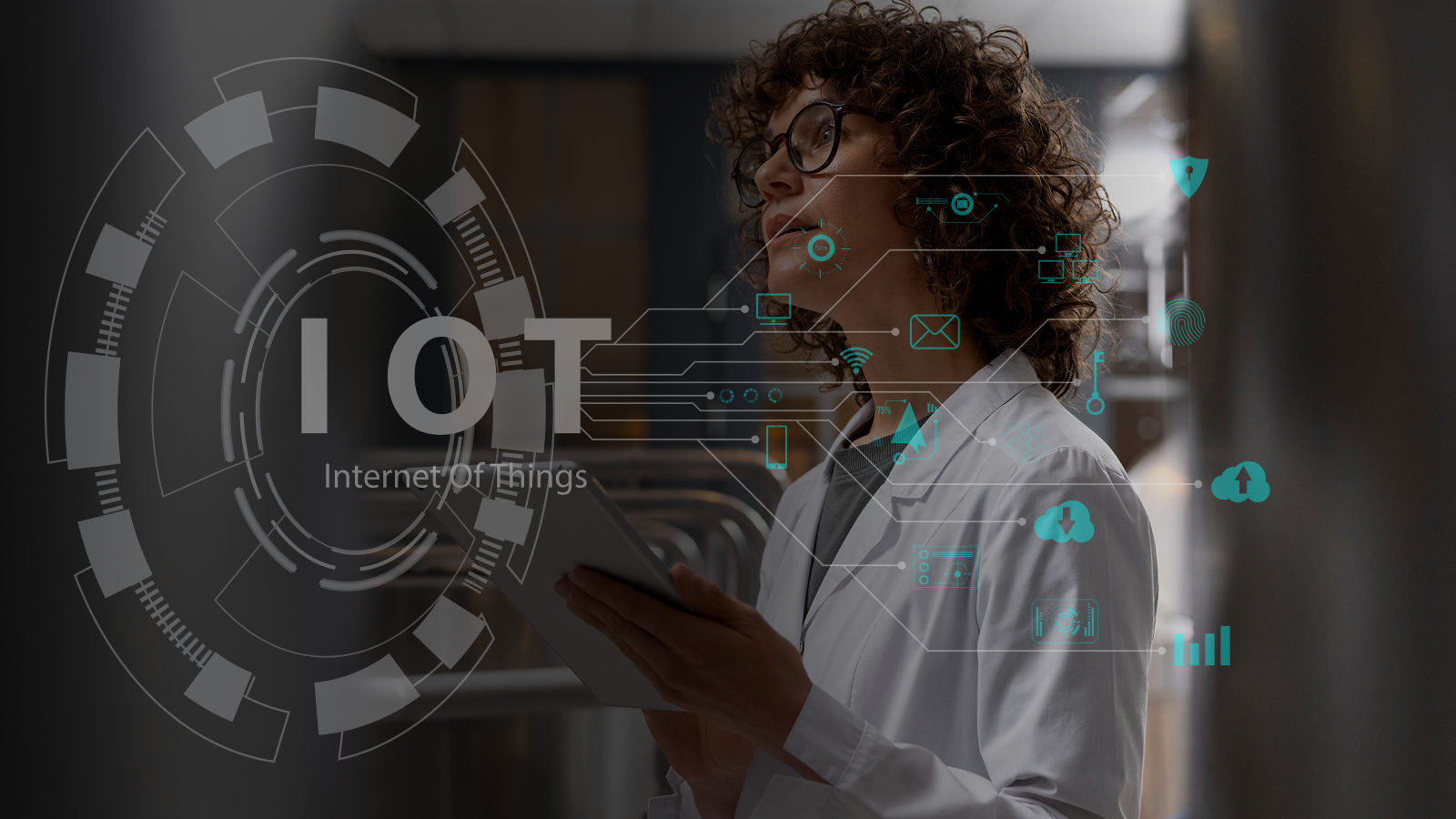
An IoT system in the simplest terms is a network of interconnected units that are able to collect data, share information, and carry out operations without the need for human intervention in most cases. The scope for these “devices” is unlimited; they can be as small as a temperature sensor or as complex as a laboratory instrument. The thing that makes a system of IoT so potent is not the individual units but the fact that they are able to communicate, analyze, and respond to the data that they have in common.
For companies whose priorities are safety, efficiency, and sustainability—like Kewaunee—in-depth knowledge of IoT systems is a must. What this technology can offer in a real-world setting is probably best exhibited by an IoT energy monitoring system, which provides the means for energy-consuming organizations to efficiently track, optimize, and manage energy consumption.
Before we dive into that, let’s break down what an IoT system truly involves.
The Basics: What an IoT System Really Is Essentially, an IoT system is based on four main pillars that are:
Devices and Sensors – The devices are the ones that directly interpret the world around us; they can be measuring temperature, relative humidity, power consumption, airflow, the vibration of a piece of machinery, or even atmospheric pressure and air quality.
Connectivity – It is the role through which the devices interact with each other and give the data that they have collected. It could be through different communication technologies like Wi-Fi, Bluetooth, cellular, Ethernet, Zigbee, LoRaWAN, or even a combination of several.
Data Processing or Cloud Infrastructure – Data is the raw material of sensors, but they are still in need of a system to process and transform them into operational or strategic insight.
User Interface or Application – The place where data is converted into valuable forms for users, through the support of dashboards, alerts, reports, and automation tools.
The ultimate outcome of these four components working together is a smart environment that is capable of self-monitoring, self-predicting, self-preventing, and ultimately, self-adapting in real-time operation. Take a smart thermostat for instance. The appliance senses the room temperature (device/sensor), sends the information to the control unit (connectivity), and figures out whether the temperature is too high or too low (processing).
Finally, your AC is regulated by the system (action/ interface). Just visualize this same concept being leveraged at a scale of an entire building, a laboratory, or a manufacturing plant. That is what an IoT system can do.
Why IoT Systems Matter Today
Industries worldwide have to respond to the growing demand of increasing their efficiency, reducing their operational costs, and conforming to stricter environmental and safety standards. Internet of Things (IoT) systems are instrumental in achieving the above three objectives.
As examples:
- Labs must have tightly controlled surroundings for very sensitive samples.
- Manufacturing facilities should be given the instructions of the risks to be able to avert the stoppage of the plant.
- Healthcare facilities depend on the continuous observation of the equipment and rooms.
- Office buildings are eager to shell out less for energy usage and other running expenses of their business by cutting energy waste.
In each of these instances, IoT adds a level of intelligence to the systems that are inherently less powerful than conventional ones. IoT systems provide an option of checking the situation at any given moment, predictive analytics, automation, and remote access rather than doing manual inspections or waiting for the reports which are delayed.
This is a scenario where the IoT energy monitoring device becomes one of the most significant and rapidly influential IoT applications.
IoT Energy Monitoring System: A Key Example of IoT in Action
Energy consumption is one of the major factors that determine the operational costs of laboratories, manufacturing units, and large facilities. However, these organizations are now required to be more energy-efficient and eco-friendly. An IOT energy monitoring system leads to that goal by delivering the real-time data of energy consumption at the level of equipment, rooms, and processes.
It operates in the following manner:
1. Smart Sensors Track Energy Consumption
Electrical sensors detect the power consumption of single equipment, whole circuits, or entire facilities. They are always on, thus, collecting a lot more data between their visits than manual readings.
2. Data Is Transmitted to a Central Platform
Through secure connectivity, the system sends this energy information to a cloud or local server where it is stored and processed.
3. Analytics Convert Numbers Into Insights
By energy system usage routines, the software can determine the consumption peak, identify the inefficient machines, or detect a sudden peak in the energy use of a certain machine which is actually a fault of the machine.
4. Users Get Real-Time Dashboards and Alerts
Facility managers are able to monitor energy consumption in real-time, compare the usage of different areas, and get notifications if there is a fault.
5. Automation Can Reduce Waste
If a facility is equipped with a high-end system, the system is able to turn off equipment that is not in use, change the HVAC settings to the ambient temperature, or optimize lighting based on occupancy automatically.
With the help of an IOT energy monitoring system, organizations are able to keep their energy costs under control, lower their carbon footprints and enhance the performance of their equipment by means of the data they have collected.
Real-World Applications of IoT Systems
IoT systems are no longer limited to futuristic factories. Today, they are used across countless industries. Here are a few ways they are transforming different environments:
1. Smart Laboratories
IoT-equipped labs can monitor:
- Fume hood usage
- Air quality
- Room temperature and humidity
- Safety conditions
- Equipment status and energy consumption
Systems like an IOT energy monitoring system help labs reduce unnecessary energy load, especially from ventilation systems and high-power equipment.
2. Industrial and Manufacturing Facilities
IoT sensors track:
- Machine health and vibration
- Predictive maintenance needs
- Production output
- Energy consumption
- Safety and security
This helps industries avoid costly downtime and optimize operations.
3. Smart Buildings
IoT systems in commercial buildings manage:
- HVAC systems
- Lighting automation
- Occupancy tracking
- Water consumption
- Elevator operations
Energy monitoring is particularly valuable for reducing monthly utility bills.
4. Healthcare and Hospitals
IoT helps hospitals monitor:
- Medical equipment
- Patient rooms
- Sterile environment conditions
- Energy usage
Automation ensures safer and more efficient operations.
Benefits of Implementing an IoT System
Whether it’s a lab, a hospital, or a large industrial plant, IoT systems deliver advantages that can be seen almost immediately.
Better Efficiency
IoT reduces manual labor, automates routine tasks, and provides real-time performance data.
Reduced Operational Costs
Systems like the IOT energy monitoring system help cut unnecessary energy usage, which directly lowers costs.
Improved Safety
Sensors can detect hazards like gas leaks, equipment malfunctions, or unsafe environmental changes.
Predictive Maintenance
IoT can warn teams before equipment fails, preventing unplanned downtime.
Data-Driven Decision Making
Instead of guessing, organizations get reliable insights based on continuous monitoring.
Sustainability and Compliance
IoT helps companies meet green standards and regulatory requirements with accurate reporting.
The Growing Role of IoT in Modern Infrastructure
As the intricacies of buildings, laboratories, and production facilities escalate, the need for intelligent systems also rises. The Internet of Things is no longer a matter of selecting an option—it is becoming a standard component of the new infrastructure.
Just look at Kewaunee, for example, whose primary focus is on the integration of the most advanced technologies into high-performance laboratory solutions. By installing IoT devices in lab furniture, fume hoods, and controlled environments, the company is ensuring that its clients get safer, more efficient, and future-ready spaces.
Energy efficiency is also one of their main concerns, that is why the IOT energy monitoring system is an ideal instrument for laboratories and modern facilities that wish to be eco-friendly without compromising their performance.
Conclusion: IoT Systems Are the Future of Smarter Spaces
As structures, labs, and industrial units get intricate, the demand for smart systems is soaring. The Internet of Things (IoT) is still a choice, but it’s gradually turning into a must-have element of the new kind of infrastructure.
Take Kewaunee, for instance, it is a company that concentrates on creating high-performance laboratory solutions that seamlessly connect with the latest technological advancements. The integration of IoT devices in laboratory furniture, application of the fumes in the hoods, as well as controlled environment, the company goes to provide the customers with safety, efficiency, and space that is ready for the future.
Moreover, energy-saving measures are at the core of the decision-making process, which makes the IOT energy monitoring system an ideal solution for labs and contemporary facilities that wish to operate in an environmentally friendly manner without lessening their performance.
Kewaunee International Group

Kewaunee, the global leader in total laboratory solutions, empowers organisations to achieve competitive advantage through safe, efficient, and contemporary laboratories. In existence since 1906, Kewaunee powers the laboratories for over 5,000 customers in more than 100 countries.









Comments are closed.