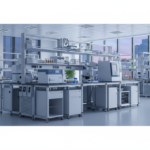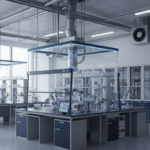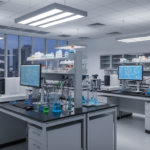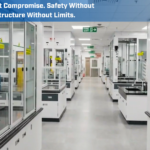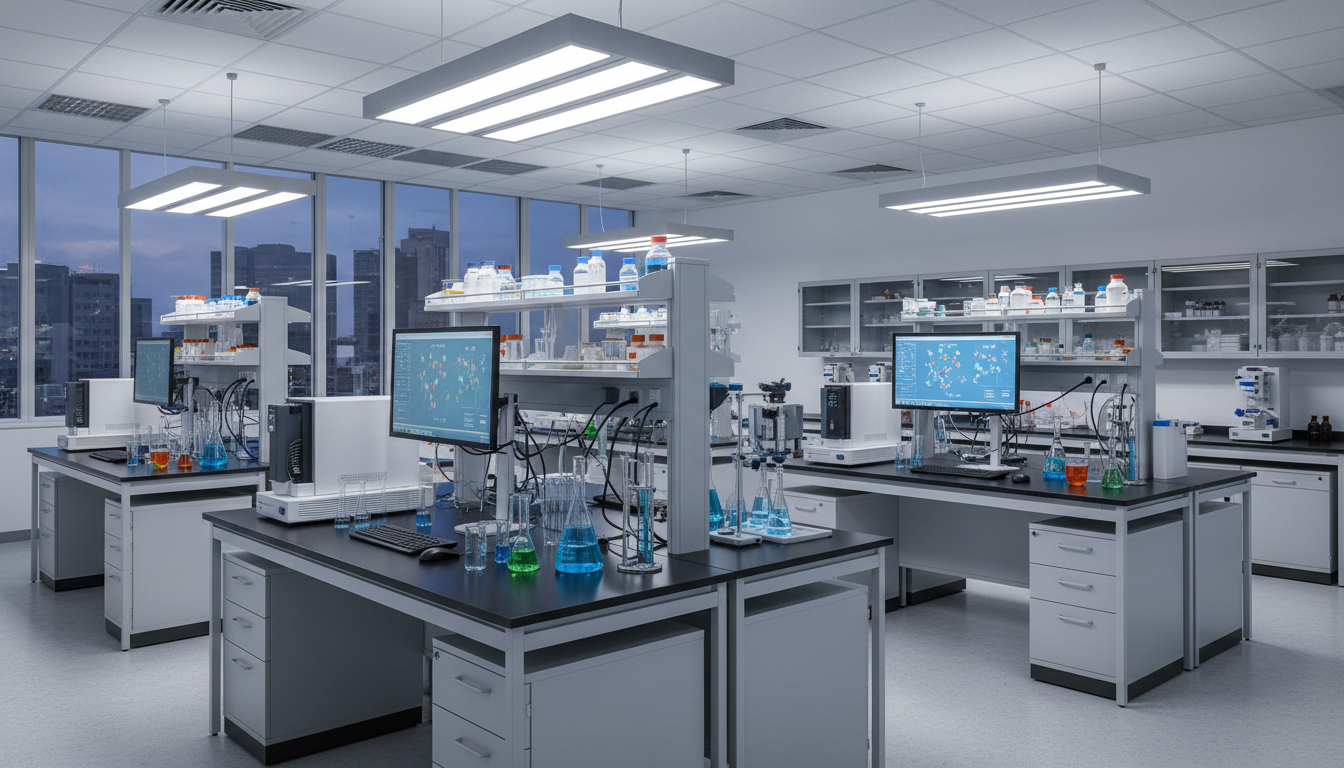
Setting up a lab is a bit like designing your dream house, it’s all in the details. From workstations and venting systems to glassware and embedded sensors, every detail must be explored and executed to perfection. It takes time, focus, and often the hiring of specialists to ensure the design is fully functional. But even more than that, you need to anticipate the future! Research moves fast, so our designs must support evolution within our work mode, from batch to miniaturized parallel synthesis, from liquid handling to digital, and encourage the introduction of new technologies that we might not yet implement today.
Planning and Architectural Oversight
The most efficient use of space first defines what is absolutely critical and what can be flexible. In every lab, ventilation is critical, because a single bench may need as much air as one whole room in your house. Also, not all equipment needs to be physically in the lab. Large equipment that is less frequently used can be located outside of the lab spaces while still being easily accessed, conserving valuable lab space. Next, a well-designed laboratory is adaptable. It should be able to respond to changes in science or technology without massive changes to the infrastructure. The lab space plan should include part of the space for future expansion, or it should be easy to reconfigure. This may require supervisory support to implement.
How important is design? It should be informed by all the features we discuss above. But specifically, your lab design influences how effectively you can use your space. A well-set-out laboratory, with a logical workflow that minimizes movement and contamination risks, makes better use of the room you have. Virtuous space design will even make pre-existing labs more efficient if a redesign is out of the question. Plan the best layout you can get.
Spatial Design and Workflow Errors
Your laboratory setup plays a major role in your day-to-day efficiency. Do you ever stop and wonder if it’s really working for you? Most labs face congestion and clutter, while others isolate workers in distant units. Navigating these spaces can also be tough, particularly for people and trolleys passing each other. For chemical labs, wet and dry areas should be separate. If they’re not, there’s a higher risk of cross-contamination. This also applies to sample preparation, analysis, and storage areas. The same concept applies to digital labs, where separate areas are used for instrument setup and operation, data analysis, and team collaboration.
Ergonomic design receives less focus than it should. If desks and workstations are too high, too low, or employees have to strain at their tasks, people will get tired and mistakes will creep in or accidents happen. That’s why every element from benches and stools that are easily adjustable and have a steady base; task lighting for each bench; to trolleys and ladders for reaching supplies and high shelves has to facilitate the work of the technician.
Safety, Compliance, and Storage Missteps
The first thing most people think of when you say “lab safety” is fire extinguishers and eye wash stations. And for sure, putting out fires and rinsing chemicals from your eyes are important responses…(and seriously, stop, drop, and roll). But those are response activities. They’re terribly important, but the goal of lab safety is for the lab work to go right in the first place. Most response activities are important to get right just in case, but it’s far better if you…
You’ve probably guessed that there’s danger in not following the rules for handling, storing and disposing of hazardous or potentially hazardous substances in your laboratory. But do you know how potentially catastrophic, both in human health and in money terms, contravening the laws can be? Data, laws, and expertise on the risks and the precautions don’t stand still. We’re learning about new dangers all the time. And new regulations to keep us safe are coming out constantly. Are you keeping up? TEST text:Ignoring compliance is risky. Local regulations mandate stringent safety and security measures for storage of hazardous or potentially hazardous chemicals or substances. Non-adherence to these regulations can result in hazardous pollution, environmental damage, or serious contamination. Do you really want to risk your employees’ health or even the safety of your entire workplace? What about having it closed down until it’s safe again? Or fines that could significantly affect your bottom line. Or paying for a clean-up that could take months or even years? Or the irreversible damage to your reputation? The stakes could scarcely be higher.
Non-Compliant Storage for Flammable and Hazardous Materials
Can you really put a price on quality? You’d expect lower costs and more convenience from generic products but that doesn’t mean you’d use just about any product, would you? In most cases investing that little bit extra makes a whole lot of difference.
Are our digital laboratories any different? What happens if we store our sensitive equipment or sensitive chemicals right by our electrical panels? Or we fail to ground our ultra-sensitive instruments properly? We could end up damaging our equipment or causing accidents.
Checklist for Final Pre-Commissioning Safety Audits
What safety audit items would you typically include in a plant pre-commissioning checklist? Some of the obvious ones might relate to the confined space assessment, ensuring the effectiveness of lockout-tagout procedures, double-checking the integrity of power distribution systems, or even verifying grounding for lightning protection. What else would you include?.
- Check that all laboratory workbenches and workstations are sturdy and securely positioned.
- Make sure that nothing is blocking the way to emergency exits and that all pathways are free of obstacles.
- Are showers ready to wash off a new splash of a hazardous chemical? One way to find out is to walk by and pull the handle to activate the water, and see if it’s tepid. But you really don’t want to have to do that. The water in a safety shower shouldn’t be too hot or too cold; it should be just right, ideally between 60 and 100° F. Showers should activate in one second or less and should have a stay-open valve. And all of that can be the difference between a minor incident and a life-changing emergency. So test it.
- Check chemical storage to guarantee that all substances are properly labeled and stored in appropriate cabinets.
- Make sure all data is kept safe on digital lab systems with backup systems and recovery plans.
- How about we get everyone together for a safety drill to walk through what we do in an emergency?
Conclusion
If you ask most lab managers about their number one priority, chances are launching research as soon as possible will be at the top of their list. However, because they’re often dependent on equipment installation timelines, the design and set-up planning phases tend to be cut short. Unfortunately, this often results in rushed planning, poor design, and safety oversights. Whether it’s a chemical lab in Pune or a digital lab in Bangalore, the common mistakes in lab planning & design outlined below are best to avoid, as they typically involve hidden costs that are uncovered after poor lab performance, and/or injuries to lab staff.










Comments are closed.